The History Of Halloween And Tips For A Safe Trick-Or-Treating Night
Halloween is one of those holidays that can feel completely different depending on your age.
For young children, it may mean choosing a costume, carrying a bucket from house to house, and wondering how much candy they can collect before the night is over. Teenagers may look forward to spending the evening with friends. Parents often experience Halloween from a different perspective, helping with costumes, planning trick-or-treating routes, decorating the house, and making sure everyone gets home safely.
For others, Halloween is simply part of what makes fall enjoyable. Pumpkins appear on porches, leaves cover neighborhood sidewalks, homes are decorated, and communities come alive for an evening that feels a little different from the rest of the year.
It is easy to think of Halloween as a modern holiday built around costumes and candy, but many of its traditions have roots that reach back hundreds or even thousands of years. Over time, customs from different cultures blended together and eventually developed into the Halloween celebrations familiar to families today.
The holiday has changed considerably along the way, but one thing has remained consistent. Halloween has long been a time when communities come together.
Understanding a little of that history makes the traditions more interesting. Knowing a few important safety tips can also help make sure the night remains fun for everyone.
Halloween Has Much Older Roots Than Candy And Costumes
Many Halloween traditions are connected to the ancient Celtic festival of Samhain, which marked the transition from summer into winter.
For Celtic communities centuries ago, the changing season carried much more significance than it does for most people today. Winter could be difficult, and the end of the harvest represented an important turning point in the year.
Samhain was associated with that transition. People gathered, lit fires, and observed traditions connected to the changing seasons and beliefs about the boundary between the living and the dead.
As Christianity spread through Celtic regions, existing traditions began mixing with Christian observances. November 1 became associated with All Saints’ Day, also known as All Hallows’ Day, while November 2 became All Souls’ Day.
The evening before All Hallows became known as All Hallows’ Eve.
Over time, the name gradually developed into the word we use today: Halloween.
The modern holiday is not a direct continuation of any single ancient celebration. Instead, it developed over many centuries as religious traditions, folk customs, immigration, and popular culture influenced the way people celebrated.
That long history helps explain why Halloween includes such an unusual combination of traditions. Costumes, ghosts, pumpkins, pranks, candy, parties, and neighborhood gatherings may seem unrelated, but each developed from different pieces of the holiday’s past.
Costumes Have Been Part Of Halloween Traditions For Centuries
Dressing up may seem like one of the more modern parts of Halloween, but costumes have connections to much older traditions.
During early seasonal celebrations, disguises and costumes were sometimes connected to beliefs about spirits. Over time, European customs developed in which people dressed up and traveled from home to home.
One tradition known as “souling” involved people visiting houses in exchange for food while offering prayers for the dead. Another practice called “guising,” particularly associated with Scotland and Ireland, involved dressing in disguise and performing songs, jokes, or other small acts in exchange for food or treats.
Those traditions eventually helped influence the door-to-door Halloween customs that developed in North America.
Today, costumes are much less serious.
Children become superheroes, witches, athletes, animals, movie characters, firefighters, princesses, monsters, and just about anything else they can imagine. Adults participate too, whether for costume parties, community events, or simply because Halloween offers an excuse to have a little fun.
The meaning has changed, but dressing up remains one of the traditions that connects modern Halloween celebrations with customs from generations ago.
How Trick-Or-Treating Became A Halloween Tradition
Trick-or-treating as we know it today developed gradually.
Different traditions contributed to the idea of going door to door in costume and receiving something in return. European customs such as souling and guising traveled to North America with immigrants, particularly people arriving from Ireland and Scotland.
Halloween celebrations became increasingly common in the United States during the late 1800s and early 1900s. Communities held parties, games, parades, and other seasonal activities. Mischief also became associated with the holiday, sometimes becoming disruptive enough that communities began looking for ways to make Halloween more organized and family friendly.
Door-to-door trick-or-treating became increasingly popular during the first half of the 20th century and grew significantly during the years following World War II.
Candy eventually became closely connected to the tradition, although children did not always receive the individually wrapped sweets that fill Halloween buckets today. Earlier treats could include fruit, nuts, coins, small toys, or homemade foods.
As commercially produced candy became easier to distribute and individually wrapped pieces became widely available, candy became the obvious choice.
By the second half of the 20th century, trick-or-treating had become one of the most recognizable Halloween traditions in the United States.
For many families today, it remains the main event.
Pumpkins Were Not Always The Halloween Standard
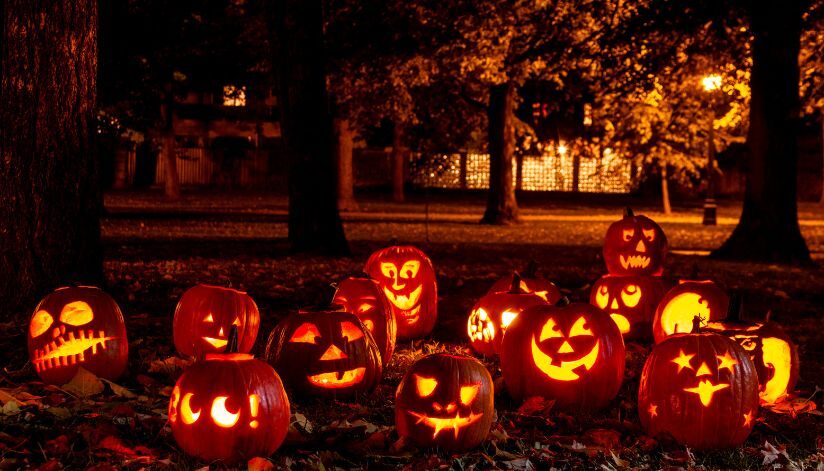
Few things represent Halloween as clearly as a carved pumpkin glowing on a porch.
The jack-o’-lantern tradition, however, did not originally depend on pumpkins.
Carving vegetables into lanterns has roots in Ireland and other parts of the British Isles, where turnips and similar vegetables were used. Folklore surrounding figures such as “Stingy Jack” helped connect carved lanterns with stories about wandering spirits.
When Irish immigrants brought these traditions to North America, they found pumpkins were much larger and easier to carve.
The pumpkin quickly became the better option.
Over time, carving pumpkins became less connected to folklore and more connected to family fun and creativity. Some families carve simple smiling faces. Others create elaborate designs that require templates, special tools, and considerably more patience.
Today, pumpkins are part of the entire fall season. They appear in decorations, food, community events, farms, and front yards long before October 31 arrives.
Halloween simply gives people an excuse to give them faces.
Halloween Became A Community Celebration
One reason Halloween has remained popular is that it gives neighborhoods and communities an unusual opportunity to interact.
On most evenings, families may arrive home from work and school, eat dinner, and spend the night inside. Halloween changes the routine.
Porch lights come on. Neighbors sit outside. Children walk from house to house. Parents talk while following behind. People who may normally only wave from across the street suddenly spend a few minutes visiting.
Schools, churches, businesses, municipalities, and community organizations often add their own celebrations through costume contests, trunk-or-treat events, parties, haunted attractions, and other activities.
In that way, Halloween has become about more than candy.
It creates a shared experience.
That community atmosphere is part of what makes the night memorable, especially for children. Many adults can still remember the neighborhoods where they trick-or-treated, the costumes they wore, and the houses that always gave out the best candy.
Keeping that experience safe allows the fun to remain the focus.
Make Costumes Fun And Easy To See
Costumes may be the part children are most excited about, but they can also create practical problems once trick-or-treating begins.
A costume that looks great at home may be difficult to walk in for an hour. Long capes, dresses, or oversized clothing can become tripping hazards. Shoes that do not fit properly can become uncomfortable. Masks may limit how well a child can see approaching cars, curbs, steps, or other people.
Before Halloween night, have children try on the entire costume rather than only individual pieces.
Let them walk around in it. Make sure they can see clearly and move comfortably. Check whether anything drags on the ground or catches around their feet.
Visibility is especially important because much of trick-or-treating takes place after sunset.
Bright costumes are easier for drivers to see. Reflective tape or reflective elements can be added to clothing, treat bags, jackets, or shoes without changing the overall costume. Flashlights and glow sticks can also help children remain visible while walking between homes.
Costume accessories deserve some thought too. Swords, canes, and other props should be soft and flexible rather than sharp or rigid enough to cause an injury if someone falls.
The best costume is one a child can enjoy without spending the entire evening adjusting it.
Plan The Trick-Or-Treating Route Before Leaving Home
A little planning before trick-or-treating can prevent confusion later.
Parents of younger children should generally accompany them throughout the evening. Before leaving, decide which streets or neighborhoods you plan to visit and how long you expect to be out.
Older children who are ready to trick-or-treat without a parent should still have a clear plan.
Know who they are going with, where they will be, and when they are expected home. Encourage them to stay together rather than splitting up during the night. Phones should be charged before leaving, but children should avoid staring at screens while walking near traffic.
A familiar neighborhood is usually easier to navigate after dark than an unfamiliar area.
Encourage children to visit homes where porch lights are on and walk along well-lit routes whenever possible.
Halloween is supposed to feel spontaneous, but having a general plan makes it easier for everyone to enjoy the evening without wondering where the group is headed next.
Street Safety Is One Of The Most Important Parts Of Halloween
Halloween creates an unusual environment for both pedestrians and drivers.
There are more children walking through neighborhoods after dark, and many are excited, distracted, wearing costumes, and thinking much more about the next house than approaching traffic.
That means everyone needs to pay a little more attention.
Children should use sidewalks whenever they are available and cross streets at intersections or marked crosswalks when possible. They should avoid running between parked cars or suddenly entering the roadway.
Before crossing, stop and look carefully in every direction. Drivers who are turning may not immediately see pedestrians, even at intersections.
Parents should remind children that having the right of way does not guarantee that a driver has seen them.
Phones can create another distraction. Looking down at a screen while walking makes it easier to miss cars, bicycles, uneven sidewalks, or other trick-or-treaters.
Drivers have an equally important responsibility.
If you are driving through a neighborhood during trick-or-treating hours, slow down and expect children to appear in places they normally would not. Watch carefully around parked vehicles, driveways, intersections, and areas where visibility is limited.
Backing out of a driveway requires extra attention because small children can be difficult to see.
Even drivers who are not participating in Halloween should remember that October 31 is not an ordinary evening in residential neighborhoods.
Slowing down for a few minutes can make the night safer for everyone.
Check Candy Before Kids Start Eating
For children, collecting the candy is only half the fun. The other half is getting home, dumping everything onto the table, and seeing what they brought back.
It is a good idea for parents to look through treats before younger children begin eating them.
Discard anything that is open, spoiled, damaged, or appears unusual. Homemade or unwrapped treats may be fine when they come from someone the family knows and trusts, but commercially wrapped treats are generally easier to evaluate.
Parents should also consider choking hazards for younger children. Hard candy, gum, nuts, popcorn, and some chewy candies may not be appropriate depending on a child’s age.
Food allergies require additional attention.
Parents should read labels carefully rather than assuming that a familiar brand is automatically safe. Miniature or seasonal versions of candy can sometimes have different ingredients or manufacturing information than the standard version.
Children with food allergies should understand which treats they can and cannot eat, and adults supervising them should know how to respond if an allergic reaction occurs.
Some households also choose to offer nonfood Halloween treats, such as stickers, pencils, glow sticks, or small toys. Those options can be especially appreciated by families managing food allergies.
No child needs to eat an entire night’s collection immediately either.
Sorting favorite treats and saving the rest for later can stretch the fun well beyond Halloween night.
Homeowners Can Help Make Trick-Or-Treating Safer
Safety is not only the responsibility of trick-or-treaters and drivers.
People handing out candy can make a few simple changes around the house that help visitors navigate the property safely.
Start by looking at the path children will use to reach the door.
Remove garden hoses, toys, tools, decorations, or anything else someone could trip over in the dark. Wet leaves can become slippery, especially on steps and sidewalks, so clearing them before trick-or-treating begins is a good idea.
Make sure outdoor lights are working and keep the path to the door well lit.
Pets are another consideration. Even friendly dogs can become overwhelmed by repeated doorbell ringing, unusual costumes, and dozens of unfamiliar visitors. Keeping pets in a secure room during busy trick-or-treating hours can protect both the animal and guests.
Pumpkin lighting deserves attention too.
Battery-operated candles and lights can create the traditional jack-o’-lantern glow without an open flame. If real candles are used, pumpkins should be placed somewhere children and costumes will not brush against them.
A welcoming porch does not need to be elaborate.
Good lighting and a clear path can make just as much difference as the decorations.
Do Not Forget About Teen Drivers And Adult Celebrations
Halloween safety does not end with younger children.
Teen drivers may be on the road at the same time neighborhoods are filled with trick-or-treaters. Parents should remind inexperienced drivers to reduce their speed, stay off their phones, and expect pedestrians in unexpected places.
Adult Halloween parties create another concern.
Anyone planning to drink should decide how they will get home before the celebration begins. A designated driver, rideshare, taxi, or other sober transportation removes the temptation to make a poor decision at the end of the night.
Hosts can help by making nonalcoholic drinks readily available and encouraging guests to plan transportation.
Halloween should end with everyone getting home safely.
That may not be the most exciting part of the holiday, but it is one of the most important.
Keep The Focus On Fun
Halloween comes with plenty of safety reminders, but the goal is not to make families nervous about celebrating.
Most precautions are simple.
Wear a costume you can walk and see in. Bring a flashlight. Use sidewalks. Cross where drivers expect pedestrians. Stay with the group. Slow down when driving. Check treats before eating them.
None of those things take away from the fun.
They simply help protect the traditions people look forward to every October.
Children should still get excited about their costumes. They should still debate which house gives out the best candy. They should still come home with a bucket that somehow becomes heavier with every block.
Parents should still take too many pictures.
Neighbors should still enjoy seeing the parade of superheroes, ghosts, princesses, athletes, animals, and monsters arriving at the door.
That is what Halloween is supposed to be.
Celebrating The Traditions That Bring Communities Together
Halloween has changed considerably from the ancient customs that helped shape it.
What began as seasonal and religious traditions evolved over centuries into a holiday filled with pumpkins, costumes, candy, decorations, parties, and trick-or-treating.
Today, much of Halloween is simply about having fun together.
It gives families something to look forward to as fall settles in. It brings neighbors outside. It creates traditions children may remember long after they stop carrying a candy bucket from door to door.
At Drugan’s Castle Mound, we appreciate Wisconsin supper club traditions that bring families, friends, and communities together. Halloween is another reminder that some of the best parts of the season are the experiences we share with the people around us.
Whether your October 31 includes an elaborate costume, a simple pumpkin on the porch, a neighborhood full of trick-or-treaters, or a quiet evening at home, we hope it is filled with plenty of fun and good memories.
Plan ahead, watch out for one another, and have a safe and happy Halloween!